The Detention Line Item Is About to Get Its Own Row on the Invoice
For years, a carrier hauling into your dock had almost no way to tell whether the detention it waited through actually got paid. The broker collected an accessorial from the shipper, paid the carrier some bundled number, and the detail disappeared into a single line. On August 27, 2026, the FMCSA sent a proposed rule to the White House that would change that — brokers would have to show, transaction by transaction, whether detention, layover, and fuel were charged and passed through. The rule regulates brokers, not warehouses. But every detention dispute it creates or resolves starts with one question: what time did the truck actually check in and check out at your facility? If your answer is a spreadsheet someone updated from memory, you're going to be on the losing side of that conversation more often.
What actually happened on August 27, 2026
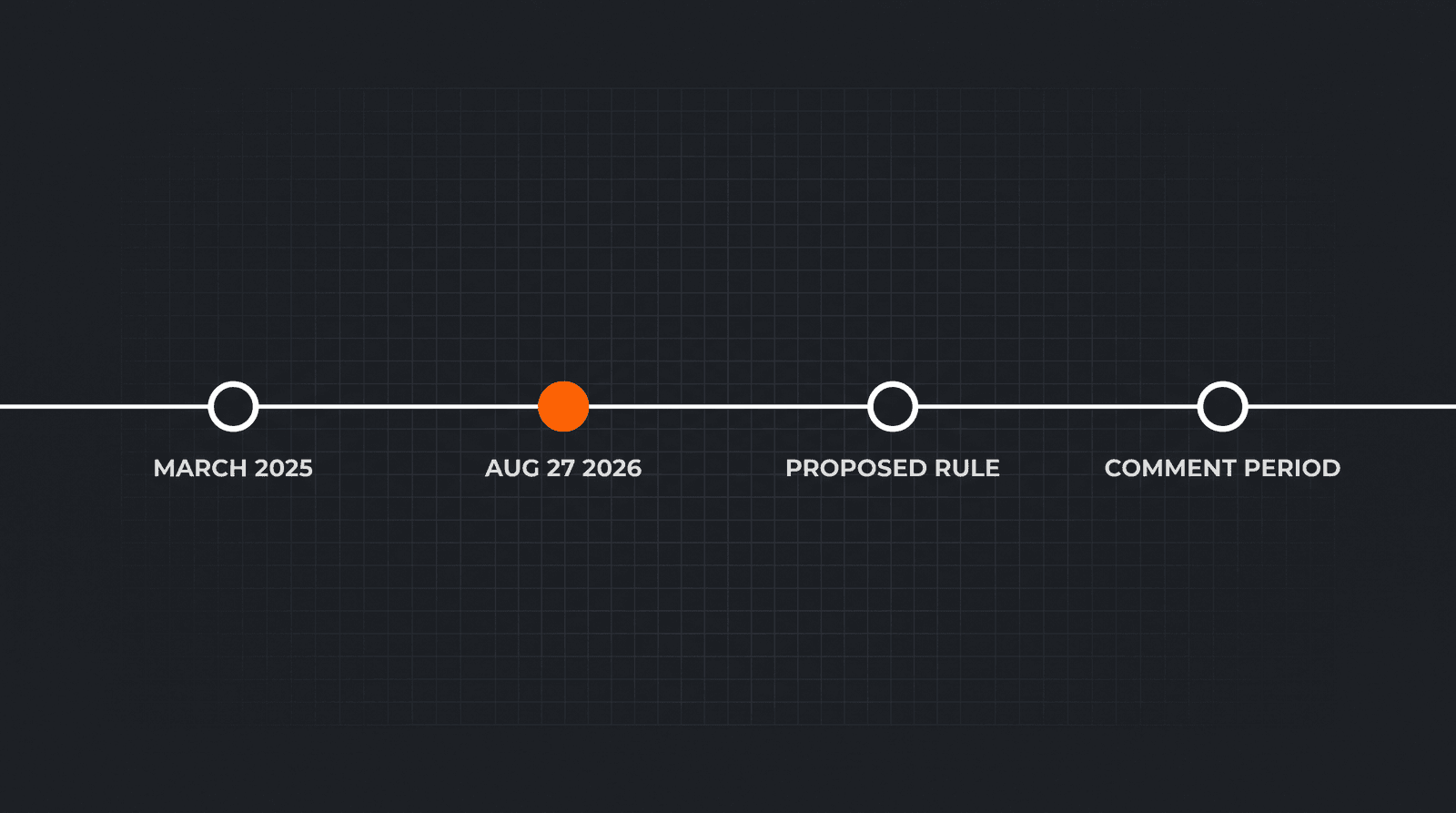
According to trade coverage from FreightWaves, CCJ, and Overdrive, the FMCSA sent its second broker-transparency rulemaking to the White House's Office of Information and Regulatory Affairs on Thursday, August 27, 2026. That office is the last review checkpoint before a proposed rule can be published in the Federal Register and opened for public comment. As described in that reporting, the proposal would require brokers to itemize accessorial charges — so a carrier could see whether it was actually paid for detention, layover, or fuel — instead of collapsing them into one bundled figure, and it references the existing requirement under 49 CFR 371.3 for brokers to keep records of each transaction, with discussion of a roughly 48-hour window to provide those records on request. This is the first movement on the file since the comment period on the earlier proposal closed in March 2025, and it had already missed two 2026 target dates. The rule text itself is not public yet. Everything above is as characterized by trade press, it is still under White House review, it could change before publication, and there is no effective date — this is a proposed rule heading toward a comment period, not a regulation in force.
Aug 27, 2026
date FMCSA sent the rule to the White House's regulatory review office (FreightWaves, CCJ)
49 CFR 371.3
existing broker record-keeping requirement the proposal builds on
March 2025
when the comment period on the prior proposal closed — first movement since then
Why a broker-carrier rule lands on your dock anyway
The rule does not regulate warehouses, shippers, or receivers. A facility is not a party to the broker's records and has no filing obligation under it. What changes is the pressure on the number your dock produces. Right now, when a carrier bills detention, the broker often has room to dispute or absorb it quietly because the accounting is opaque on all sides. If detention has to be itemized and documented per transaction, both the broker and the carrier have a direct financial reason to pin down exactly when the truck arrived and when it was released — and the only neutral record of that is the facility's. Expect more detention invoices that cite "your gate log says 9:12" and more carriers asking for a timestamped check-in confirmation before they leave the yard. A warehouse running paper logs or a shared spreadsheet has nothing defensible to answer with. A warehouse with a check-in and check-out record per appointment has the one document everyone in the dispute is now required to reconcile against.
A concrete scenario: the detention claim you can't answer
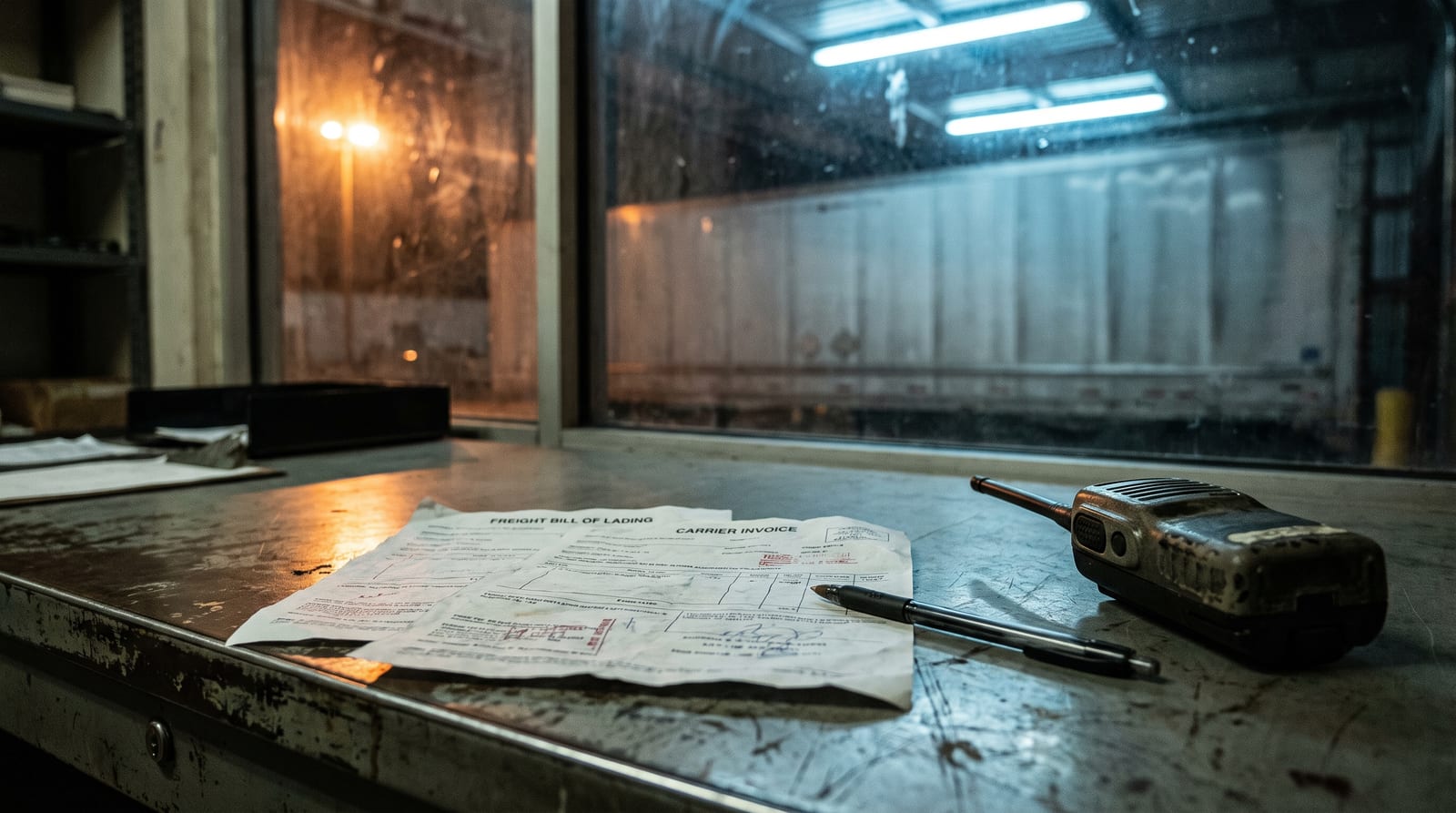
Picture a mid-size distribution center with eight dock doors, running inbound appointments off a shared spreadsheet and a clipboard at the guard shack. A carrier delivers a full truckload at 8:00am on a Tuesday. The driver signs in on the paper sheet — the guard writes "8:05," roughly. The truck sits. A door opens up around 10:40, the load comes off, the driver leaves near noon. Nobody logs the departure.
Three weeks later a detention invoice arrives through the broker: four hours of detention at $75 an hour, $300, citing a 7:50am arrival and a 12:15pm release. The DC's ops manager pulls the spreadsheet. It shows the appointment was booked for 8:00am. It does not show when the truck actually checked in, which door it used, or when it pulled out. The paper sheet says "8:05" in handwriting that could be 8:05 or 8:50. There is no basis to dispute the carrier's version, so the charge gets paid or eaten by the broker, who remembers it at the next rate negotiation.
Now run the same day under the proposed rule. The broker is required to itemize that detention charge and keep records supporting it. The carrier wants a clean arrival timestamp because it now needs to prove the charge to get paid. Both parties come back to the DC asking for its record — and the DC still has a spreadsheet and a clipboard. The rule didn't create a new obligation for the facility. It just raised the cost of not having its own version of the timeline.
The mechanism: itemized detention makes the dock's clock the reference point
Detention has always been a dispute about time. What the proposed rule changes is how many people have a financial stake in getting that time exactly right.
Today, bundled accounting means the carrier often can't see whether detention was billed, the broker has discretion to absorb or contest it, and the shipper sees one accessorial number. Ambiguity at the dock — a vague arrival time, no departure record — gets smoothed over somewhere in that chain.
If detention has to be broken out into its own documented line, that smoothing goes away. The carrier needs the arrival and release times to justify its claim. The broker needs them to keep defensible records. The shipper, seeing an itemized charge, is more likely to question it. All three point back to the same place: the facility's record of when the truck showed up and when it left. Whoever controls that record controls the starting point of the argument.
Why the rule doesn't hand you a solution
The FMCSA proposal is about broker conduct. It does not tell a warehouse how to track arrivals, does not require a facility to keep any particular record, and does not decide who owes detention when a truck waits. Trade groups on both sides — broker associations and owner-operator groups — read the same proposal differently, and the version that eventually takes effect, if one does, may look different from what's been reported. None of that produces a tool that gives your dock a clean timeline.
That gap is operational, and it's yours to close regardless of what the rule does. A facility that can produce a timestamped check-in, a door assignment, and a check-out per appointment is ready for a world where detention is itemized and scrutinized. A facility that can't is exposed to it.
Closing the gap: a defensible record per appointment
Dock-Scheduler doesn't interpret the rule or touch a broker's records. What it does is give your facility the arrival documentation those disputes now turn on:
Facility-based scheduling by dock door. Every appointment is tied to a specific facility and door, so the scheduled time and the assigned door are recorded before the truck arrives — not reconstructed afterward.
Timestamped check-in workflows. When a truck checks in, the system captures the time automatically. That's the number a detention claim gets measured against, and it exists whether or not anyone thought to write it down.
Appointment visibility. Your team sees actual arrivals against booked times in real time, so a truck drifting toward its free-time limit is visible while you can still do something about it, not discovered on an invoice weeks later.
Broker Portal. Brokers you work with get a controlled, self-service view of their own clients' schedules and can export the history to CSV or Excel — so the arrival record you both need is something they can pull themselves instead of calling your coordinator for.
Be clear about the boundary. Dock-Scheduler does not generate the transaction records the rule would require of brokers, does not issue or dispute detention invoices, and does not determine liability. It is not a compliance product, and this page is not legal advice — talk to counsel about how any final rule interacts with your carrier and broker contracts. What it provides is the one input every detention conversation starts with: an automatic, per-appointment record of when the truck arrived and when it left.
For the operational side of keeping trucks from waiting past their free window in the first place, how dock appointment scheduling reduces detention and demurrage charges covers the mechanism in more depth. If you're still coordinating on a spreadsheet, the problems that creates are worth reading first.
Is this relevant to you?
Worth acting on if:
- You receive freight booked through brokers and see detention invoices you can't confidently verify or dispute.
- Your arrival records are a paper gate log, a whiteboard, or a spreadsheet updated from memory.
- Carriers or brokers have started asking for check-in confirmations before drivers leave your yard.
Less urgent if:
- You already capture automatic check-in and check-out timestamps per appointment and can produce them on request.
- You deal directly with asset-based carriers under contracts that define detention terms and arrival documentation, with no broker layer in between.
The rule may take a year or more to land, and it may change. The record-keeping gap it exposes is fixable now. See how Dock-Scheduler works.
Frequently Asked Questions
What is the FMCSA broker transparency rule?
It's a proposed federal rule aimed at freight brokers, requiring them to keep and disclose records of each transaction — including how accessorial charges like detention, layover, and fuel were billed and whether they were passed through to the carrier. It builds on an existing record-keeping requirement under 49 CFR 371.3. As of late August 2026 it is a proposal under White House review, not a regulation in effect. The details described publicly come from trade press coverage; the rule text is not yet published.
When does the broker transparency rule take effect?
It doesn't yet. On August 27, 2026 the FMCSA sent it to the White House's Office of Information and Regulatory Affairs, which is the last step before a proposed rule is published in the Federal Register for public comment. After that comes a comment period, then a final rule, then an effective date — a process that typically takes many months and can change the rule substantially along the way. There is no effective date at this stage.
Does the broker transparency rule apply to warehouses, shippers, or receivers?
Not directly. The proposal regulates brokers and their transaction records. A warehouse or receiver has no filing obligation under it. The practical effect on facilities is indirect: if detention has to be itemized and documented per load, brokers and carriers both have a stronger financial incentive to establish exactly when a truck arrived at and departed from your dock, which puts more weight on whatever arrival record your facility keeps.
How would the rule change the way detention gets billed?
Today a broker can bundle detention, layover, and fuel into a single payment to the carrier, so the carrier often can't tell whether detention was charged to the shipper or paid through to them. The proposal, as reported, would require those charges to be broken out and backed by records available on request. That makes detention a visible, itemized, contestable line — which means the underlying facts, starting with dock arrival and departure times, get scrutinized more closely than they are now.
What records should a facility keep to handle detention disputes?
At minimum: the scheduled appointment time, the actual check-in time, the dock door used, and the check-out or departure time — each captured automatically with a timestamp, not written down after the fact. That's the record a carrier's detention claim gets measured against. A facility that can produce it per appointment is in a strong position in any dispute; one relying on a spreadsheet updated from memory or a paper gate log usually can't reconstruct a defensible timeline.
Does dock scheduling software make my facility compliant with the rule?
No, and any vendor claiming otherwise is overselling. The rule creates obligations for brokers, not warehouses — there is nothing for a facility to 'comply' with. What dock scheduling software does is give you a timestamped check-in and check-out record per appointment, which is the factual basis detention disputes now hinge on. It doesn't generate broker records, issue or contest invoices, or determine who owes detention. This page is not legal advice; consult counsel on how any final rule affects your contracts.
Own the Timestamp Everyone Else Has to Argue With
Whatever the final broker transparency rule looks like, detention disputes will keep starting with when the truck actually arrived and left your dock. Dock-Scheduler captures that per appointment — scheduled time, check-in, door, departure — as an automatic record, not a spreadsheet entry. $149.99/month flat, unlimited facilities, no demo required.